Decompose work into inspectable role agents
You avoid a single mega-prompt and can reason about responsibilities, tool access, and failure boundaries.
For architects and lead engineers
Is this technically credible, inspectable, and not a black box?
Decision answer
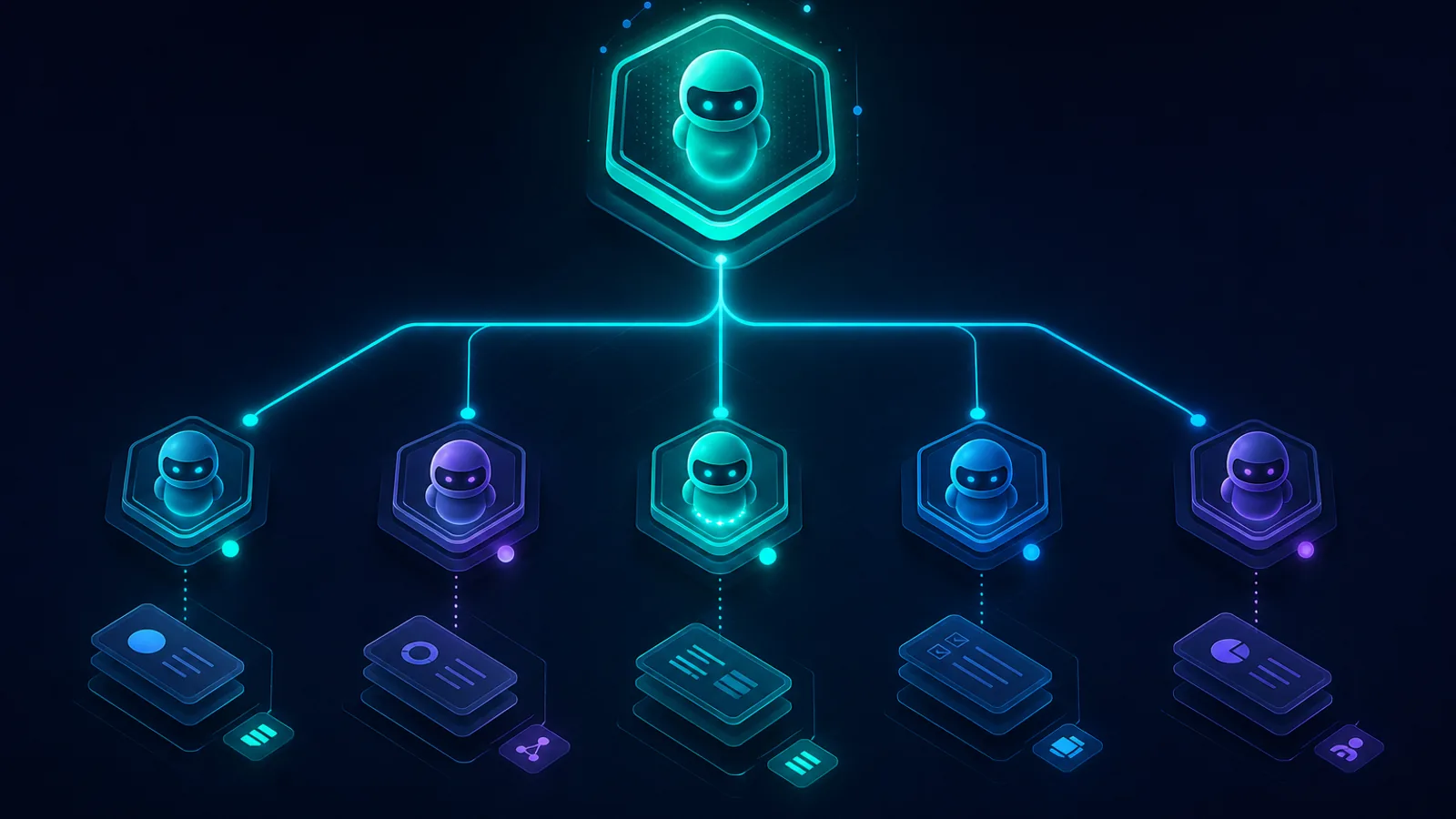
OrqForge is credible when you can see the decomposition: role agents, scoped tools, delegation paths, mission-tree lineage, review gates, and evidence. The architect page should make the implementation model feel inspectable before asking you to trust the product.
The problem you own
Most AI demos collapse the moment you ask how it actually works.
A single mega-prompt is impossible to reason about, test, or trust.
You will own whatever the business buys, so it has to be inspectable.
Outcomes this role owns
You avoid a single mega-prompt and can reason about responsibilities, tool access, and failure boundaries.
You can see which agent owned which part of the run, where it delegated, and what each specialist produced.
You can see who is working, what folded back, where work stalled, and what evidence was retained.
Proof that matters to you
This is what you need to know before the product tour or platform deep-dive is worth your time.
Agents are designed around jobs. Each role can have scoped tools, optional stages, and explicit review paths.
Orchestrators delegate to direct reports. Specialist agents run in parallel with lineage retained for inspection.
The mission tree shows where each agent is: working, awaiting reports, folding results back, or waiting on review.
Scoped
Tools and boundaries defined per agent
Inspectable
Reasoning and delegation visible per run
Optional stages
Extra structure when a process needs it
Example process
A concrete way to see the change, without turning the product into one industry or one demo.
Before
A complex request is handled by a general assistant or script. When it fails, nobody can tell which responsibility broke or which input caused the problem.
With OrqForge
The orchestrator classifies the request, delegates to scoped specialists, tracks the mission tree, and retains the lineage and evidence.
After
Architects can inspect the run, identify the failing role or handoff, adjust configuration, and preserve the control model.
Your questions, answered
Every leader in the room has different concerns. These are the questions most relevant to yours.
No. The useful abstraction is the operating model: roles, hierarchy, tool scopes, execution modes, review gates, and retained evidence. Stages are optional extra structure.
Yes. Delegation lineage and live agent status make it possible to see where work stalled or produced a weak output.
Yes. Each role is configured with its own tools and review path, so growth happens through explicit roles rather than expanding one opaque agent. Stages can be added per process if you need them.
Next step
Review roles, delegation, evidence, and integration assumptions with a technical audience.
Who is in the room
Pick the chair you sit in. Each view leads with the outcomes you own, then drills through to how it works.
Also shapes the decision
Bring the rest of the leadership team. We will walk each person through the outcomes, proof, and controls relevant to their role.